




















|
|
|
|
|
|
|
|
|
|
|


Powered by
RBS WorldPay


Wicca
The Wicces (Witches) served as healers, diviners and spiritual advisors before the arrival of Christianity. As competitors to the Roman Catholic Church they were demonized and persecuted in witch hunts. Thus, little is really known about the survival of the practice of 'witchcraft' in Europe before modern times. In written records, people deemed 'witches' (not necessarily practitioners) were primarily women who practiced forms of herbal medicine, but became unpopular in their community for one reason or another and were singled out for the attentions of the Inquisition and persecuted.
The spiritual side of Wicca is inspired by the old Pagan faiths, some Wiccans worship
two deities, the Goddess and the God sometimes known as the Horned God. Wiccans celebrate
eight main holidays: four cross-
Some Wiccans join groups called covens, though others work alone and are called "solitaries."
Some solitaries do, however, attend "gatherings" and other community events, but
reserve their spiritual practices (Sabbats, Esbats, spell-
The normal attire of a Wiccan is a pure cotton robe, to symbolise bodily purity, and a cord, to symbolise interdependence and which is often used during rituals.
In usual rites the Wiccans assemble inside a magic circle, which is drawn out in a ritual manner. Prayers to the God and Goddess are said, and spells are worked. Traditionally the circle is followed by a meal. Before entering the circle, they normally fast for the day, and have a thorough wash.
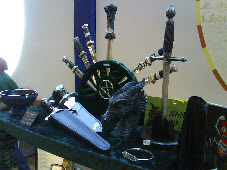
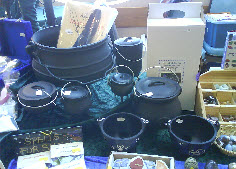
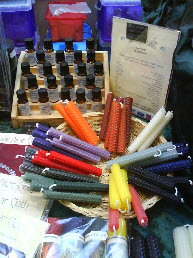
Many Wiccans use a special set of altar tools in their rituals; these can include a broom (besom), cauldron, Chalice (goblet), wand, Book of Shadows, altar cloth, athame (personal knife), altar knife, boline, candles, and/or incense. Most Wiccans keep a 'Book of Shadows' as a journal or diary which contains thoughts, spells, ideas, etc.
Sabbats and Festivals
Within Paganism and Wicca (or Witchcraft) there are many ‘holidays’ and Sabbats celebrated for various means. Not all celebrate them in the same way or even for the same reasons. That is just one of the reasons why Wicca is so versatile; it’s fluid and can adapt to suit every individuals needs and lifestyle. The Wiccan year is represented by the ‘Wheel’, the eight points which mark the important festivals or Sabbats. This wheel also serves as a calendar, marking the seasons, lunar and tidal cycles and represents the cycle of life.
The Sabbats fall into two categories of lunar and solar: Imbolg, Beltane, Lughnasadh and Samhain being the lunar festivals; the winter solstice, spring equinox, summer solstice and autumn equinox being the solar festivals. Where you begin your own Wiccan year is entirely up to you. Many witches begin at Yule – or winter solstice – as it marks the end of the darkest quarter of the year. This is a time of new beginnings, when the sun will return. The Celts begin at Samhain; and for me the year begins at Imbolg as this it the time when most of us feel ready to make ‘new starts’.
All Sabbats and Festivals are covered in depth and accessed through buttons at the side of the web page.